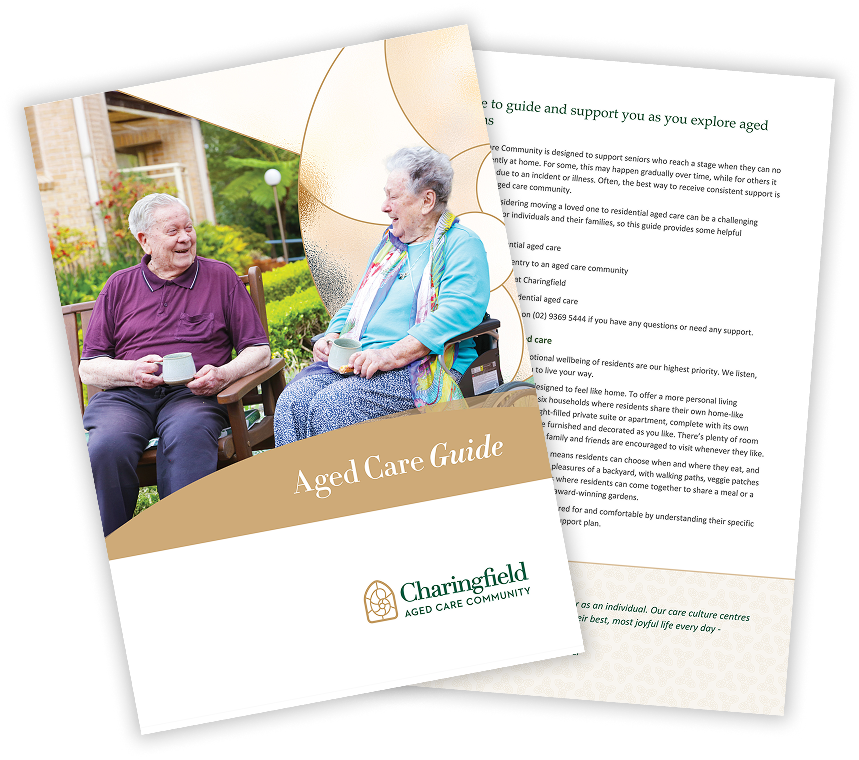
Starting the conversation about aged care
Bringing up the topic of residential aged care with your elderly parents can be challenging. It’s natural to want your ageing parents to continue living in their own home for as long as possible.
But, if you’ve noticed a change in their health, mobility or mood lately, or that they’re starting to find everyday tasks a bit more difficult, a move into an aged care community might be a safer option for them.
So, when is the best time and what’s the best way to raise the subject? Here are some tips to help you start a positive conversation about aged care:
- First talk to your siblings or other family members to make sure you’re all on the same page
Don’t wait. It’s better to have the conversation sooner, rather than later. Planning for a move into aged care is easier when they’re still able to contribute their thoughts, and before you’re forced into making urgent decisions. - Do some research first. Before you raise the topic, find out about the residential aged care communities in their local area. Contact them to take a tour and compile a list of what you liked or disliked about each one.
- Pick the best moment and location. Choose a time when you won’t be interrupted and when your loved one seems receptive and calm. The setting is also important – choose somewhere private and on neutral ground so they don’t feel ambushed. Consider options such as a scenic drive or a quiet park bench with a view.
- Choose your language carefully. Be sensitive and understanding of their concerns. Rather than leading with an emotional statement like, ‘I don’t think it’s safe for you to live at home anymore’, tell them what you’ve noticed and try something that conveys you’re in this together. A softer approach could be to say, ‘If you’re starting to find daily tasks a bit harder, what other options could we investigate?’. Ask them how they feel about their future, listen without interrupting and keep looking at things from their perspective.
- Be prepared for an emotional response. Your elderly parent might feel scared or even shocked at the prospect of leaving their own home. They might resist talking about it altogether or respond with negativity. Remind them how much you want them to live their best life possible, and that talking through options together is a way of forward planning to keep them safe and healthy. Be patient and, if you feel the conversation isn’t going well, consider trying again another time, or even engaging help from their GP or health practitioner.
Here at Charingfield, your loved one can receive around-the-clock care and support from a dedicated and compassionate team, a full home-cooked meal service, housekeeping and laundry services, a meaningful and engaging lifestyle program, daily social interaction, and pastoral care.
More information
We have more resources to help you with your aged care journey here.
Our knowledgeable and friendly team is here to help you with any questions about aged care support, or to arrange a private tour of our community. Call us on (02) 9369 5444 or email us at info@charingfield.org.au.